
Lucky Fishing – A Colorful and Engaging Arcade-Style Fishing Game
BigMumbai.Plus Lucky-Fishing is a popular arcade-style fishing game that focuses on visual action, fast interaction, and simple controls. The main idea of the game is easy to understand: players use a virtual cannon or tool to catch fish that move across the screen. Each fish represents a different value, and the result is shown instantly after a successful catch.
Because of its colorful graphics and straightforward gameplay, Lucky-Fishing is commonly featured on demo and informational platforms. It is often used to demonstrate real-time interaction, animation effects, and reward-style mechanics without requiring complex rules or long learning time.
Core Concept of Lucky-Fishing
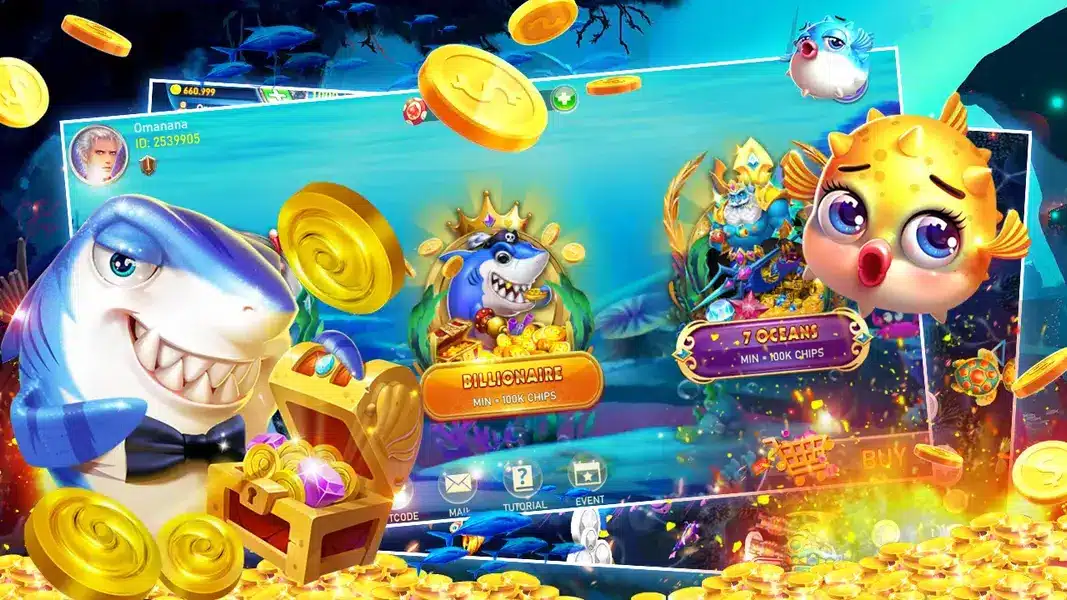
The core concept of Lucky-Fishing is built around action and timing. Fish swim continuously across the screen, and players must decide when and where to aim. Once a shot is taken, the game immediately shows whether the fish is caught or escapes.
Key elements of the core concept include:
- Moving fish with different visual designs
- A simple aiming and shooting mechanism
- Instant feedback after each action
- Clear visual distinction between targets
This structure allows users to understand the game quickly, making it suitable for beginners and casual players.
Gameplay Mechanics and Flow
The gameplay flow in Lucky Fishing is fast and repetitive in a positive way. Each round does not have a fixed start or end. Instead, the game runs continuously, allowing users to interact at their own pace.
A typical interaction flow includes:
Fish appear and swim across the screen
The player selects a target
The player activates the cannon or tool
The game processes the action instantly
The result is displayed clearly
This smooth loop keeps users engaged and encourages repeated interaction.
Visual Design and Underwater Theme
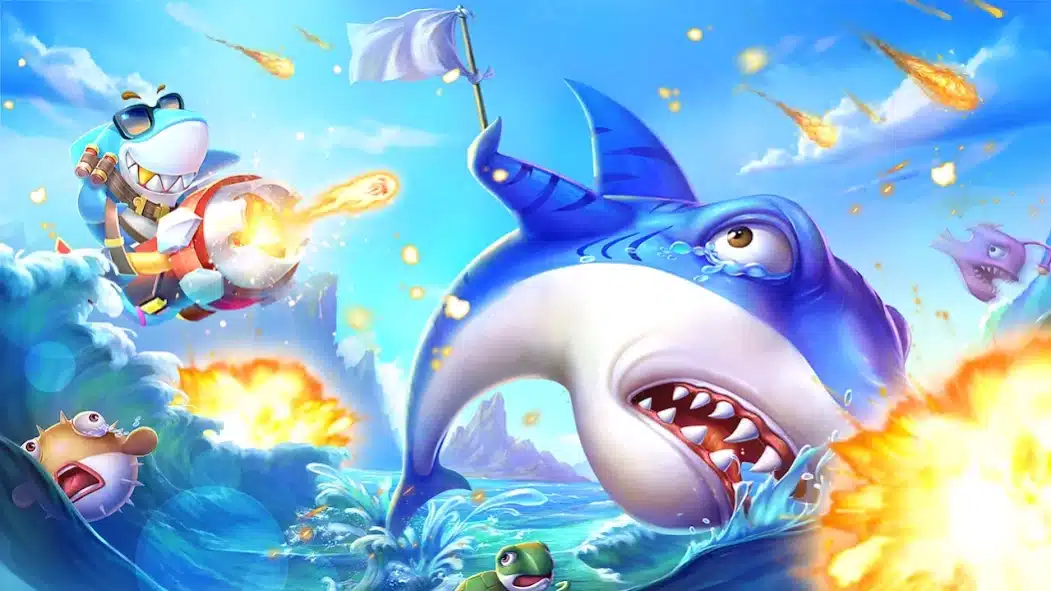
Visual design is one of the strongest features of Lucky Fishing. The game usually uses an underwater theme with bright colors, animated fish, and smooth background movement. These elements create a lively and immersive atmosphere.
Common visual components include:
- Colorful fish with unique shapes
- Animated water effects and bubbles
- Clear contrast between background and targets
- Simple but attractive interface layout
The visual clarity helps users focus on targets while enjoying the animated environment.
Animation and Motion Effects
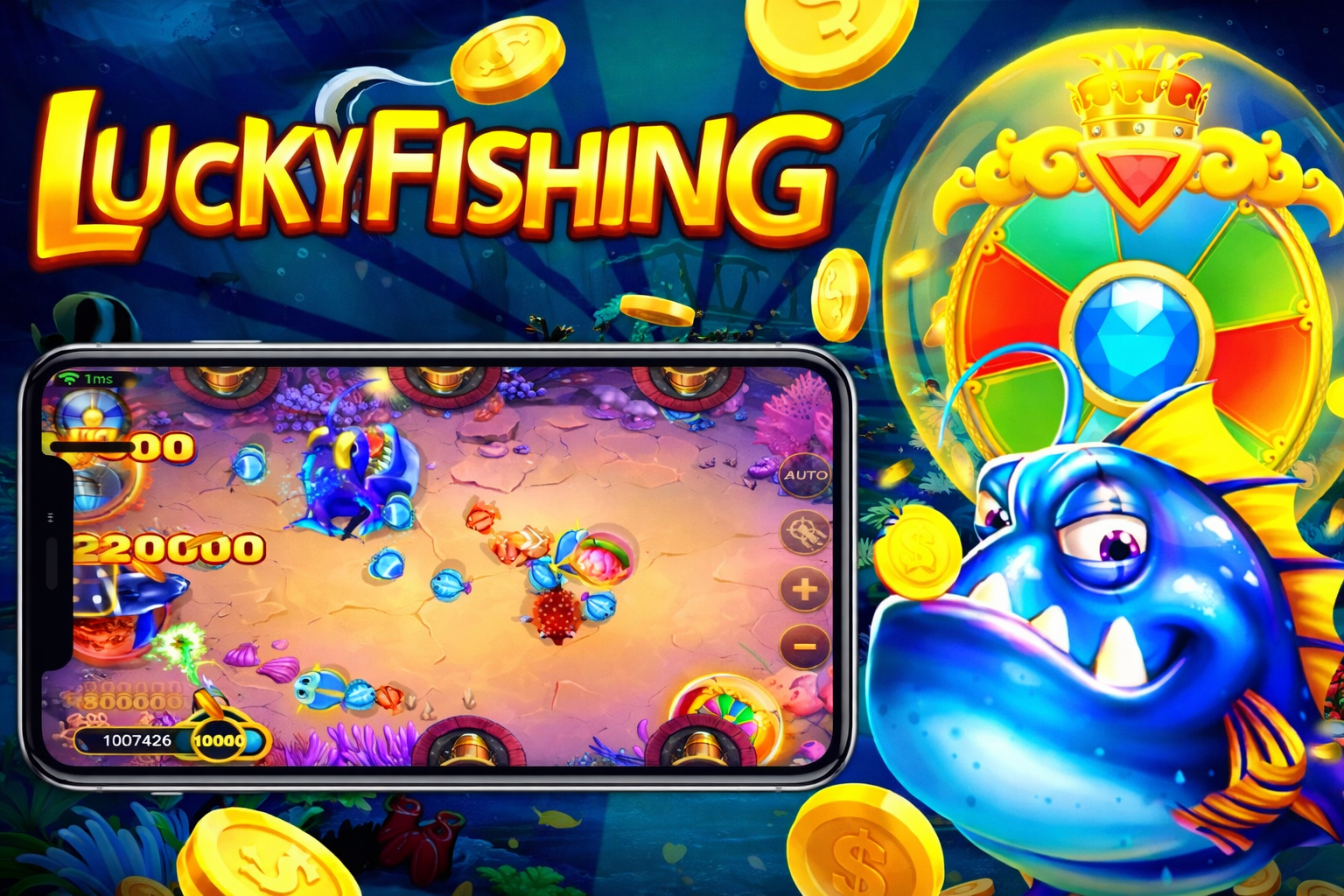
Animation plays a major role in making Lucky Fishing engaging. Fish movement is smooth and varied, creating a sense of realism and challenge. When a fish is caught, visual effects highlight the result immediately.
Typical animation effects include:
- плав swimming patterns
- Flash or glow effects on successful catches
- Smooth cannon firing animations
- Clear visual signals for results
These effects enhance the excitement without making the interface feel crowded.
User Controls and Interaction
Lucky Fishing is designed with simple controls that require minimal effort to learn. Most versions of the game use one or two basic actions, such as aiming and shooting.
User control advantages include:
- Easy one-touch or click interaction
- No complicated button combinations
- Clear visual response to user actions
This simplicity makes the game accessible on both desktop and mobile devices.
User Experience and Accessibility
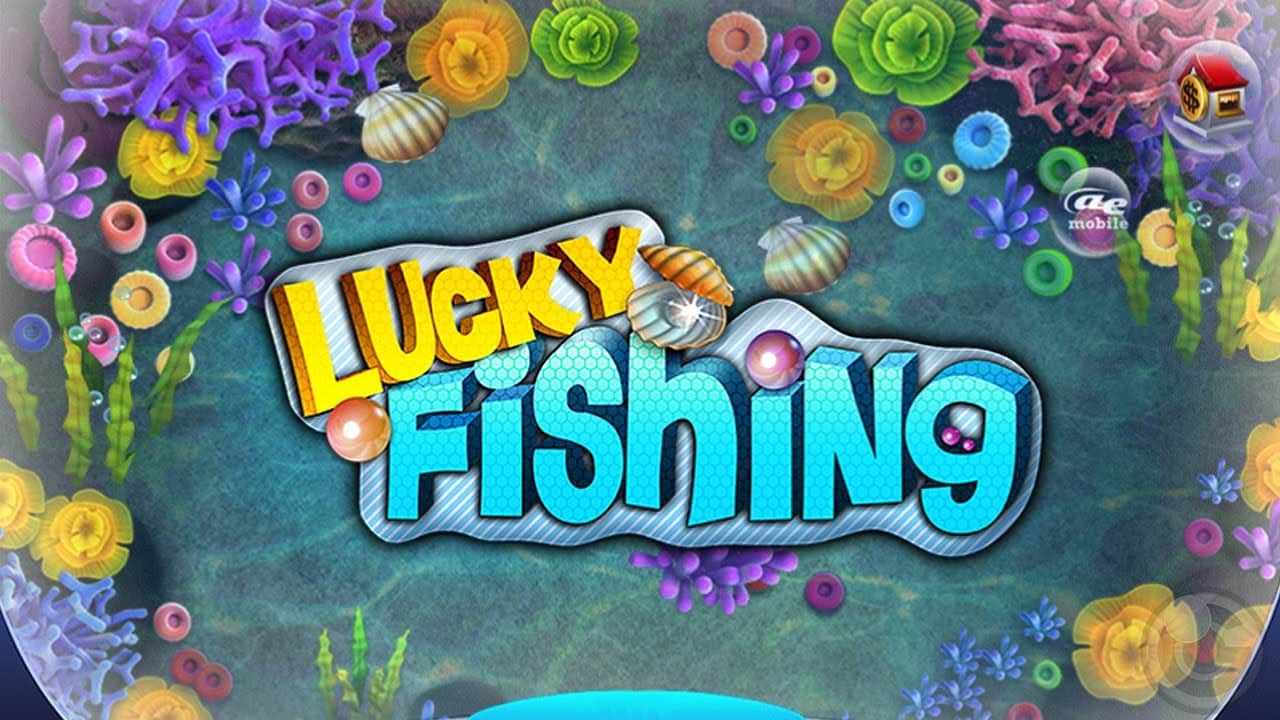
From a user experience perspective, Lucky Fishing focuses on clarity and comfort. The interface avoids unnecessary text and uses icons and visuals instead. This helps users from different backgrounds understand the game easily.
Accessibility benefits include:
- Short learning curve
- Visual guidance instead of instructions
- Adjustable pacing based on user actions
- Clear feedback after each interaction
These features make Lucky Fishing suitable for a wide audience.
Use of Lucky Fishing on Demo Platforms
On demo and informational websites, Lucky Fishing is often presented as an example of arcade-style interaction. It helps demonstrate how real-time visuals and simple mechanics can work together effectively.
Common demo use cases include:
- Showcasing real-time animation
- Demonstrating interactive UI elements
- Presenting reward-style mechanics visually
- Testing responsiveness across devices
In these cases, the game is used for educational and design demonstration purposes only.
Customization and Design Flexibility
Lucky Fishing offers strong flexibility for designers and developers. Many visual and gameplay elements can be adjusted without changing the core mechanics.
Customization options may include:
- Changing fish types and colors
- Adjusting movement speed
- Modifying background themes
- Updating interface layout
This flexibility allows the game to fit different design styles and brand themes.
Responsible Presentation on Informational Sites
On informational platforms, Lucky Fishing is presented responsibly and transparently. The game does not involve real-money transactions or financial risk. Its purpose is to demonstrate interface design and interaction flow.
Responsible presentation includes:
- Clear informational disclaimers
- No real-value rewards
- Focus on visual and educational value
This approach ensures the content remains safe and suitable for general audiences.
Why Lucky Fishing Remains Popular
Lucky-Fishing remains popular because it combines action, color, and simplicity. The continuous movement of fish and instant feedback create excitement without overwhelming users.
Reasons for its popularity include:
- Easy-to-understand mechanics
- Visually appealing design
- Fast and engaging interaction
- High replay value
These qualities make it a strong choice for demo platforms and UI showcases.
Educational Value in UI and UX Design
From a design perspective, Lucky-Fishing is a useful example of how motion, feedback, and simplicity can work together. It demonstrates how real-time interaction improves user engagement and keeps attention focused.
Design learners can study how the interface guides user behavior using visuals instead of text.
Informational Use Disclaimer
All Lucky-Fishing content on this website is provided for informational and demonstration purposes only. The game does not include real-money participation, financial rewards, or gambling activities.
Any references to points, values, or catches are used only to illustrate interface behavior and interaction design.
Conclusion
Lucky-Fishing is a strong example of how arcade-style design and simple gameplay mechanics can come together to create an engaging and enjoyable experience. By combining colorful underwater visuals, smooth animation effects, and easy-to-use controls, the game captures user attention without requiring complex rules or long learning time. This balance between simplicity and visual appeal makes Lucky Fishing especially effective on demo and informational platforms.
By placing a clear focus on accessibility, visual clarity, and responsible presentation, Lucky Fishing shows how interactive fishing-style games can be introduced in a safe and educational manner. The game helps demonstrate important UI and UX principles such as real-time feedback, intuitive interaction, and motion-based engagement. As a result, Lucky Fishing serves not only as entertainment but also as a useful example for showcasing interactive design concepts in a user-friendly and informative way.